|
Seatbelt Covers Available
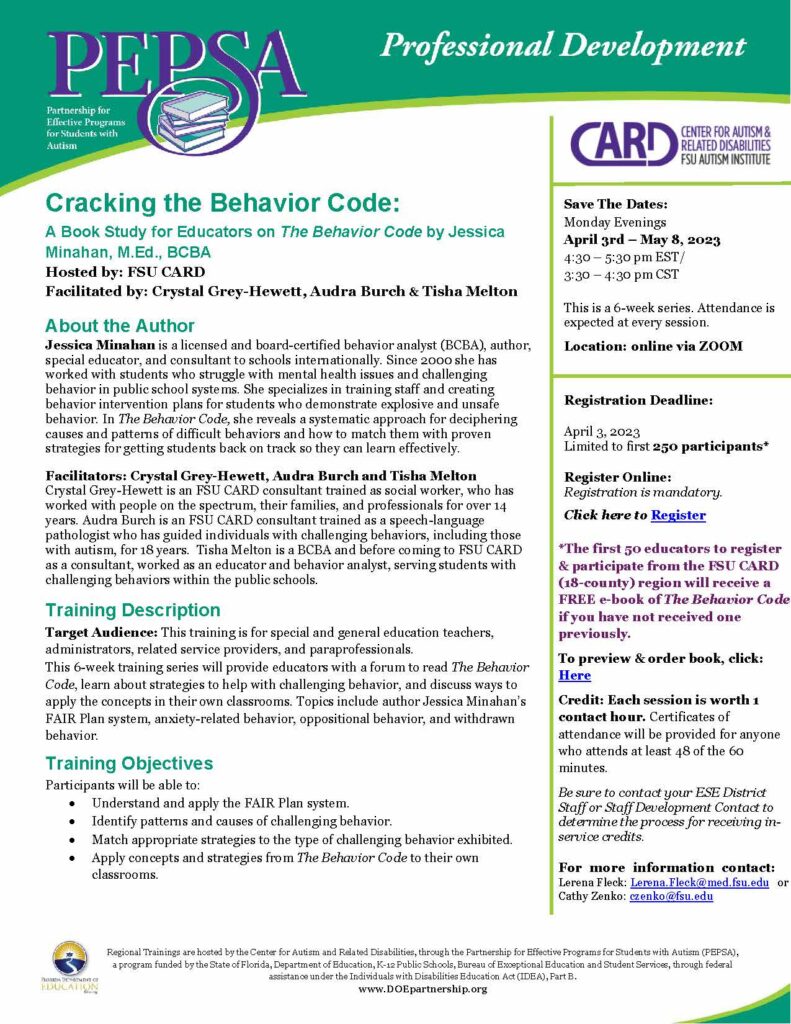
 Thanks to our partnership with Leon County Sheriff’s Office, we have seat belt covers for individuals with autism.
Requests from Leon county residents with autism will be given priority.
Thanks to our partnership with Leon County Sheriff’s Office, we have seat belt covers for individuals with autism.
Requests from Leon county residents with autism will be given priority. 


Communication Corner
By: Audra Burch

What Do I Say? Autism Language and Labels
With April being Autism Acceptance Month, it’s important to consider the best language to use when speaking and interacting with an autistic person.
There are differing opinions and positions on autism language, specifically whether to use person-first language or identity-first language. Person-first language is a way of referring to people with any disability, recognizing that people with disabilities are human first. For
example, instead of saying an autistic student, person-first language would say a student with autism. Identity-first language leads with a person’s diagnosis, such as being a “disabled person”.
Although person-first language is frequently used by professionals and parents, this practice has received criticism from self-advocates and scholars who believe that identity-defining features, such as autism, can’t be separated from a person.
Thoughts behind the use of person-first language include that it helps to ensure people with disabilities are treated with the same respect as people without disabilities. However, this type of language can be viewed as treating a disability like having a disease or illness.
Conversely, identity-first language conveys that a disability is permanent and important part of a person’s identity. The Blind, Deaf, and Autistic communities see their disabilities as being fundamental parts of who they are, and in turn, identity-first language promotes positive cultural identity. Drawbacks to using identify-first language include this type of language may cause others to think a person’s disability completely defines who they are.
Recent research in the US and other countries, like the UK and Australia, agree that as a
whole, autistic adults prefer identity-first language terms (“autistic person”) to refer to
themselves or others with autism, yet professionals who work in the autism community are more likely to support and use person-first language (“person with autism”).
However, within the research and debate on whether to use person-first language or
identity-first language, the phrase that seems the least objectionable to each side is “a
person on the spectrum.”
Overall, it’s important to acknowledge others’ personal preferences and individual rights to
decide how they’re described. It’s best to ask each individual which language they prefer.
References: “Autism Language: Person-first or Identity-first?” Autism Parenting Magazine, 22 Jun. 2021,
https://www.autismparentingmagazine.com/autism-language-person-first/. Accessed 29
Mar. 2023.
“Ask a Self-Advocate: The Pros and Cons of Person-First and Identity-First Language.”
Massachusetts Advocates for Children, 23 Apr. 2023, massadvocates.org/news/ask-a-self-
advocate-the-pros-and-cons-of-person-first-and-identity-first-language. Accessed 29 Mar.
2023
“What Label Do People on the Autism Spectrum Prefer?” All Psych, 2 Mar. 2020.
https://allpsych.com/what-label-do-people-on-the-autism-spectrum-prefer/. Accessed 29
Mar. 2023.
Spring Cleaning Strategies
By: Crystal Grey-Hewett

Spring is a great time to work on cleaning and housekeeping skills. It’s a natural tendency to want to use the change of seasons to clean up the environment and make it more beautiful, and we can also use this time to teach and reinforce the activities of daily living that will follow us and our children the rest of our lives.
Here are some spring cleaning tips to work on with your kids:
- Pick up 5-10 things per day in your room and put them where they belong. It will reinforce a routine and not feel overwhelming.
- Use the “Match It” strategy. Take a photo of a clean and organized environment and tell the person to make the room match the photo.
- Use a printed room-by-room checklist that tells the person exactly what they are expected to do.
- Use the time to focus on heavy work exercises, such as pushing a vacuum cleaner and dragging a laundry basket.
- Label certain spaces by their function. You can find very cute signs or make your own as an activity.
Brad Burnette Tribute
By: Debi Cassidy
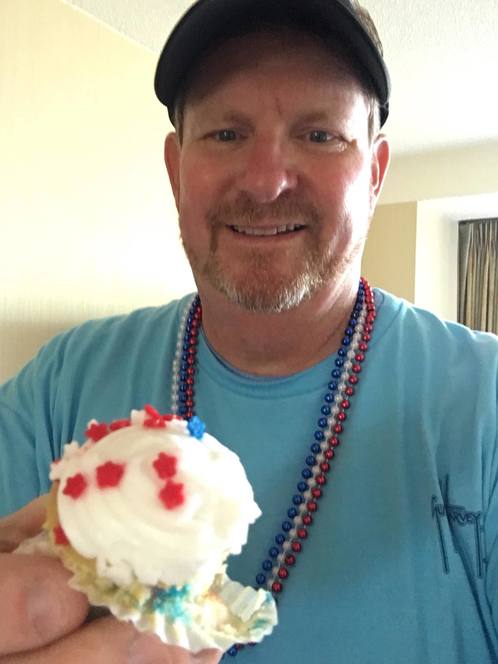 On February 28, 2023, the regional autism community lost one of its most ardent advocates. Brad Burnette was the president of Autism Spectrum of the Emerald Coast, and was one of the founders of the EMERGE group for young adults on the autism spectrum.
In his work with these organizations, he performed extraordinary and creative acts of altruism and advocacy, and took great joy and pride in the people he worked with and their accomplishments. He was also the president of and a proud coach for the Niceville Challenger League.
He is survived by his wife and five children, as well as various family members, friends, and the autism community at large. Although we will miss him, we at FSU CARD feel confident that the good work that he began will continue and flourish for years to come.
If you would like to support Brad’s family, a GoFundMe link is below.